
Running a Shopify store in 2025 without automation is like driving a car with no cruise control. You’re constantly working, always reacting, and missing big opportunities.
That’s where Klaviyo email flows come in. These automated campaigns help you welcome new subscribers, recover abandoned carts, win back inactive buyers, and delight your best customers all without lifting a finger every time.
These flows run in the background, powered by customer behavior and real-time Shopify data. They deliver the right message at the right time, increasing open rates, click-throughs, and revenue per recipient.
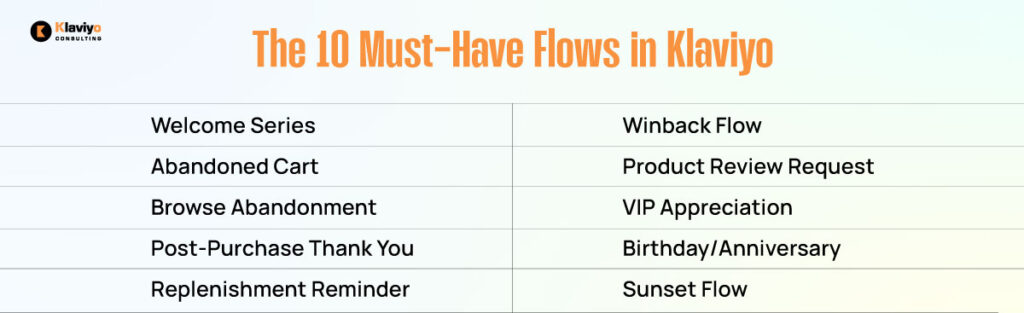
Ready to make email your best-performing channel? Here are the top 10 must-have flows every Shopify store should set up in Klaviyo today.

1. Welcome Series Flow
The welcome series is your first impression. It sets the tone, builds trust, and turns a subscriber into a shopper.
What it does: Triggers when someone signs up for your email list.
Best practices: Start with a warm hello. Introduce your brand story and values. Offer an incentive (like 10% off) to drive that first purchase. Spread the series across three to five emails to maintain high engagement without overwhelming the subscriber.
2. Abandoned Cart Flow
This is the money-maker. If someone adds a product to their cart but bounces before checkout, this flow pulls them back.
What it does: Sends a reminder with the cart contents after abandonment.
Best practices: Send the first email within one to two hours. Include product photos, pricing, and a clear call to action. If they don’t convert, follow up with urgency (“Only a few left in stock!”) or a small discount in the second or third email.
3. Browse Abandonment Flow
Some visitors don’t add items to the cart but still show strong intent by browsing. This flow helps re-engage them before they forget.
What it does: Triggers when someone views a product but does not take any further action.
Best practices: Send a subtle nudge, such as “Still thinking it over?” and showcase the exact product they viewed. If possible, include a related product recommendation or customer review to build confidence.
4. Post-Purchase Thank You Flow
Saying thank you builds loyalty. This flow turns a first-time buyer into a repeat customer.
What it does: Automatically sends after a successful purchase.
Best practices: Start with a sincere thank-you message. Follow up with order tracking info, tips on using the product, and a note about what to expect next. This is also a great time to upsell complementary products or introduce your rewards program.
5. Replenishment Reminder Flow
If you sell consumables or refills (such as skincare, supplements, or coffee), this flow brings customers back when it’s time to restock.
What it does: Reminds customers to reorder after an estimated usage period has elapsed.
Best practices: Calculate the average lifespan of a typical product. Then trigger an email shortly before they run out. Use subject lines like “Time for a refill?” or “Don’t run out of your favorite…” for the best results.
6. Winback Flow (Lapsed Buyers)
Not every customer stays active forever. A winback flow helps re-engage buyers who haven’t shopped in a while.
What it does: Targets customers who haven’t purchased within a set timeframe (e.g., 60–90 days).
Best practices: Lead with a warm re-engagement message, such as “We miss you!” Offer a small incentive to return or highlight new arrivals. Use Klaviyo’s predictive churn indicators to target the right people at the right moment.
7. Product Review Request Flow
Social proof boosts trust. This flow encourages recent buyers to leave a review, which helps convert future shoppers.
What it does: Triggers after product delivery, giving the customer time to use the product.
Best practices: Keep the ask simple and make it mobile-friendly. Incentivize reviews with loyalty points or entry into a giveaway. Include a product image and a direct review link.
8. VIP Customer Appreciation Flow
Your top customers deserve VIP treatment. This flow strengthens the relationship and boosts retention.
What it does: Targets customers who spend the most or order frequently.
Best practices: Send exclusive content, early access to new products, or special discount codes. Use subject lines like “You’re a VIP now, here’s your reward.” Make it personal and heartfelt. Recognition goes a long way.
9. Birthday or Anniversary Flow
Everyone loves to feel special. These date-triggered flows surprise and delight your subscribers.
What it does: Sends an automated message on the subscriber’s birthday or the anniversary of their first purchase.
Best practices: Offer a discount or free gift. Personalize it with their name and make the message festive. For best results, collect this data during onboarding or through occasional pop-ups.
10. Sunset Unengaged Subscribers Flow
Not everyone wants to hear from you all the time. This flow helps clean your list and protect deliverability.
What it does: Targets subscribers who haven’t opened or clicked in a long time (e.g., 90+ days).
Best practices: Start with a re-engagement attempt, such as “Still want to hear from us?” If they don’t interact, remove them from your list. This helps maintain high open rates and reduces spam complaints.
Why These 10 Klaviyo Flows Matter in 2025?

Shopify stores are more competitive than ever. Manual emails won’t cut it. These automated flows enable you to stay in touch with your customers without constantly checking your inbox.
Each flow is based on customer behavior, not guesswork. That’s the power of Klaviyo. With a few hours of setup, you create a full-funnel experience that drives engagement, loyalty, and long-term revenue. Set them once. Optimize over time. Watch your email ROI grow.
Automate Growth with Klaviyo Email Flows
If you’re only sending newsletters, you’re leaving money on the table. Klaviyo flows enable Shopify brands to scale smarter in 2025.
From welcoming new subscribers to reactivating lapsed buyers, these 10 flows do the heavy lifting for you. They speak directly to where the customer is in their journey. No spam. Just smart, timely, personalized communication.
Turn them on. Fine-tune your messaging. And let your store’s email engine run 24/7, even while you sleep.