Email marketing isn’t just surviving in the digital world; it’s absolutely thriving. For eCommerce brands, the right eCommerce email marketing platform remains one of the highest-performing channels for generating ROI. According to Litmus, email marketing yields an average return of $36 for every $1 spent. That isn’t just effective. It’s essential.
However, not all email platforms are made equal. The right email tool can significantly boost your sales and help you establish lasting customer relationships. The wrong one can waste your time and tank your conversions. The gap between a platform built for online stores and one retrofitted for them shows up directly in revenue.
In 2026, the three biggest names dominating the eCommerce email space are Klaviyo, Mailchimp, and ActiveCampaign. But which platform actually delivers the best results for online stores? Let’s dive deep and find out.
Why Choosing the Right Email Platform Is Critical for eCommerce Success
Picking the right eCommerce email marketing platform for your store isn’t just a checkbox on your to-do list. It’s one of the most important decisions you’ll make for long-term growth. Your email tool sits at the center of how you talk to customers, recover lost sales, and turn one-time buyers into repeat shoppers.

When you’re selling online, timing and personalization are everything. If your platform doesn’t communicate with your store in real time, your emails will appear out of sync. Outdated product information, generic promotions, and late automations can all damage the customer experience. Imagine sending a “complete your purchase” reminder for an item that sold out an hour ago. That small mismatch erodes trust.
With the right tool, you can create personalized emails triggered by browsing behavior, abandoned carts, past purchases, and other relevant events. You can also segment your list based on buying habits, purchase frequency, and average order value. A customer who buys every month should not receive the same message as someone who hasn’t opened an email in 90 days. That level of precision is how real eCommerce growth happens.
Klaviyo Overview: Built Exclusively for eCommerce
Klaviyo isn’t just another email platform. It’s designed from the ground up for eCommerce businesses. It doesn’t treat email as a separate channel. Instead, it integrates deeply with your store, using real-time data to deliver smarter, more personalized email and SMS campaigns.
Once you connect your store, you get access to predictive analytics, dynamic product feeds, advanced segmentation, and automated flows for nearly every customer action. Everything feels tailored, fast, and efficient. The platform was purpose-built for online sellers, which is why agencies and in-house teams often default to it when revenue is on the line.
Shopify Integration: A Native Powerhouse
Klaviyo’s Shopify integration is seamless. With one click, your store, product catalog, customer data, and order history are synced. No third-party tools. No patchwork apps. Everything runs in real time.
When someone browses a product, adds it to their cart, or places an order, Klaviyo captures the information instantly. This lets you trigger highly relevant campaigns without delay. You can build flows based on specific products, collections, or customer behavior within minutes. For a deeper walkthrough of how this connection works, see our guide on Sync Products, Orders, and Customers with Klaviyo + Shopify Integration.
Advanced Segmentation and Real-Time Tracking
Segmentation is where Klaviyo truly excels. You can build audience segments based on virtually anything, including the last product viewed, total spend, days since last purchase, items in cart, and more.
These segments update in real time. If a customer makes a purchase, their status and behavior automatically update across all flows and lists. You can treat your email list like a living ecosystem rather than a static spreadsheet. This matters because static lists go stale fast, and stale lists hurt both relevance and deliverability.
Mailchimp Overview: Budget-Friendly for Beginners
Strengths for Small Shops and Startups
Mailchimp has been a household name in email marketing for over a decade. For beginners and small businesses, it offers a simple interface, a drag-and-drop email builder, and a free plan that covers the basics.
If your store is just getting started and your focus is on sending occasional newsletters or welcome emails, Mailchimp will suffice. It’s straightforward and has a low entry barrier, which makes it a reasonable first step for a brand testing the waters.
Where Mailchimp Falls Short in eCommerce Automation
Mailchimp wasn’t built for eCommerce first, and it shows. It lacks key features like real-time product sync, predictive analytics, and advanced customer journey flows. Its automation capabilities are basic at best.
In fact, Mailchimp lost its native integration with Shopify back in 2019. While you can still connect them using tools like ShopSync or Zapier, these workarounds can be unreliable. Sync delays and broken connections are not uncommon, and a broken sync means triggered flows fire late or not at all.
As a result, if you’re serious about automation, customer segmentation, and personalization, Mailchimp can feel limiting once order volume grows.
A Look at Templates, Flows, and Integrations
Mailchimp has a good selection of templates, but they’re mostly geared toward general email marketing, not eCommerce-specific use cases. You won’t find polished prebuilt flows for cart abandonment, post-purchase follow-ups, or VIP campaigns ready to launch.
It does integrate with several platforms, including WooCommerce, Squarespace, and Magento, but often through plugins or middleware rather than direct connections. Each added layer is one more point of failure to monitor.
ActiveCampaign Overview: CRM Meets Email Marketing
CRM Features That Appeal to Multi-Channel Brands
ActiveCampaign is more than just an email platform. It combines email marketing, CRM, and automation into one powerful system. That makes it appealing to businesses that sell both online and offline or have long sales cycles.
If you’re running a hybrid business or need to manage leads, track deals, and run multi-step campaigns, ActiveCampaign might be a better fit than the others. It shines when a human sales process sits alongside automated email.
Workflow Automation and Sales Funnels
One of ActiveCampaign’s biggest strengths is its visual automation builder. You can create detailed workflows that branch out based on actions, time delays, tags, or other logic.
These automations are great for sales pipelines or educational sequences, but less optimized for eCommerce-specific behaviors. Unlike Klaviyo, you won’t get prebuilt flows for product recommendations, repeat purchases, or abandoned cart sequences out of the box. You’ll often build those from scratch.
Shopify Integration: Workarounds and Limitations
ActiveCampaign offers a Shopify integration, but it’s not as tight as Klaviyo’s. The data doesn’t sync instantly, and product feeds don’t update emails in real time.
This means if you’re trying to send dynamic product recommendations or cart recovery emails, you’ll need workarounds or third-party apps. That adds complexity and slows down your campaigns, which is the opposite of what time-sensitive eCommerce messaging needs.
Feature-by-Feature Breakdown for eCommerce Use Cases
To make the comparison concrete, here is how the three platforms stack up across the features that matter most to online stores.
- Native Shopify Integration: Klaviyo offers seamless, one-click integration with Shopify, including real-time syncing of full customer and product data. Mailchimp no longer has a direct integration and relies on third-party tools, which can introduce syncing issues. ActiveCampaign offers a partial integration that lacks Klaviyo’s real-time syncing power.
- Built-In eCommerce Flows and Templates: Klaviyo provides a comprehensive library of prebuilt flows for abandoned cart, win-back, post-purchase, product review requests, and more. Mailchimp lacks these and requires manual setup for everything. ActiveCampaign offers some prebuilt automations, but they lean toward CRM rather than eCommerce.
- SMS Marketing Capabilities: Klaviyo includes native SMS, so you can combine SMS and email in a single automation for consistent, timely messaging. Mailchimp and ActiveCampaign rely on Twilio or other third-party providers, which adds complexity and cost.
- Predictive Analytics and Reporting: Klaviyo includes built-in predictive tools that forecast customer lifetime value, expected next order date, and churn risk. Neither Mailchimp nor ActiveCampaign offers native predictive analytics.
- Real-Time Product Sync: Klaviyo pulls in your full product catalog and keeps it current, so dynamic product blocks reflect live prices, availability, and variants. Mailchimp doesn’t offer this, and ActiveCampaign requires manual setup or external tools to simulate it.
Pricing Comparison: Which Platform Offers the Most Value?
Klaviyo starts at $20 per month for up to 500 contacts. The best part is that even the free plan includes access to its full feature set, including automations, flows, and SMS. You aren’t penalized on capability while you’re small.
Mailchimp offers a lower starting price of $13 per month for 500 contacts, along with a free plan. However, many eCommerce features are locked behind higher tiers or unavailable altogether, so the low headline price can be misleading.
ActiveCampaign starts at $29 per month for 1,000 contacts and doesn’t offer a free plan. You pay more as you grow, and you also pay for CRM features even if you don’t need them.
For most eCommerce stores, Klaviyo offers the best value by combining powerful features with scalable pricing.
User Experience and Ease of Use
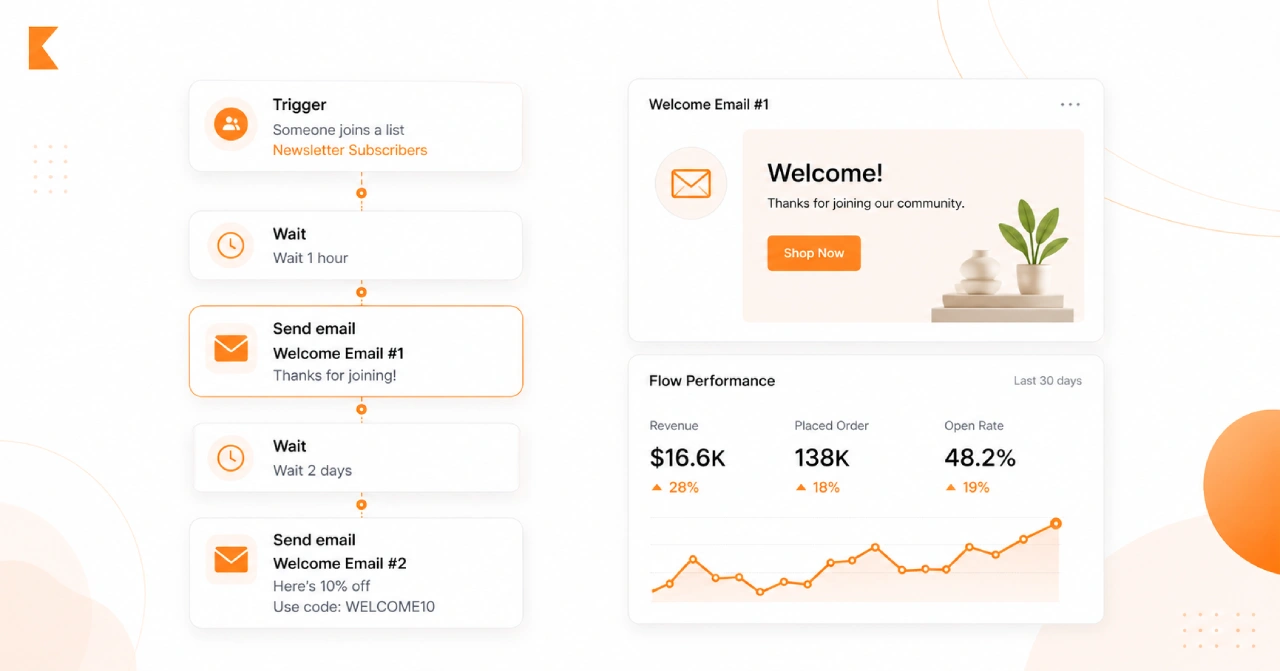
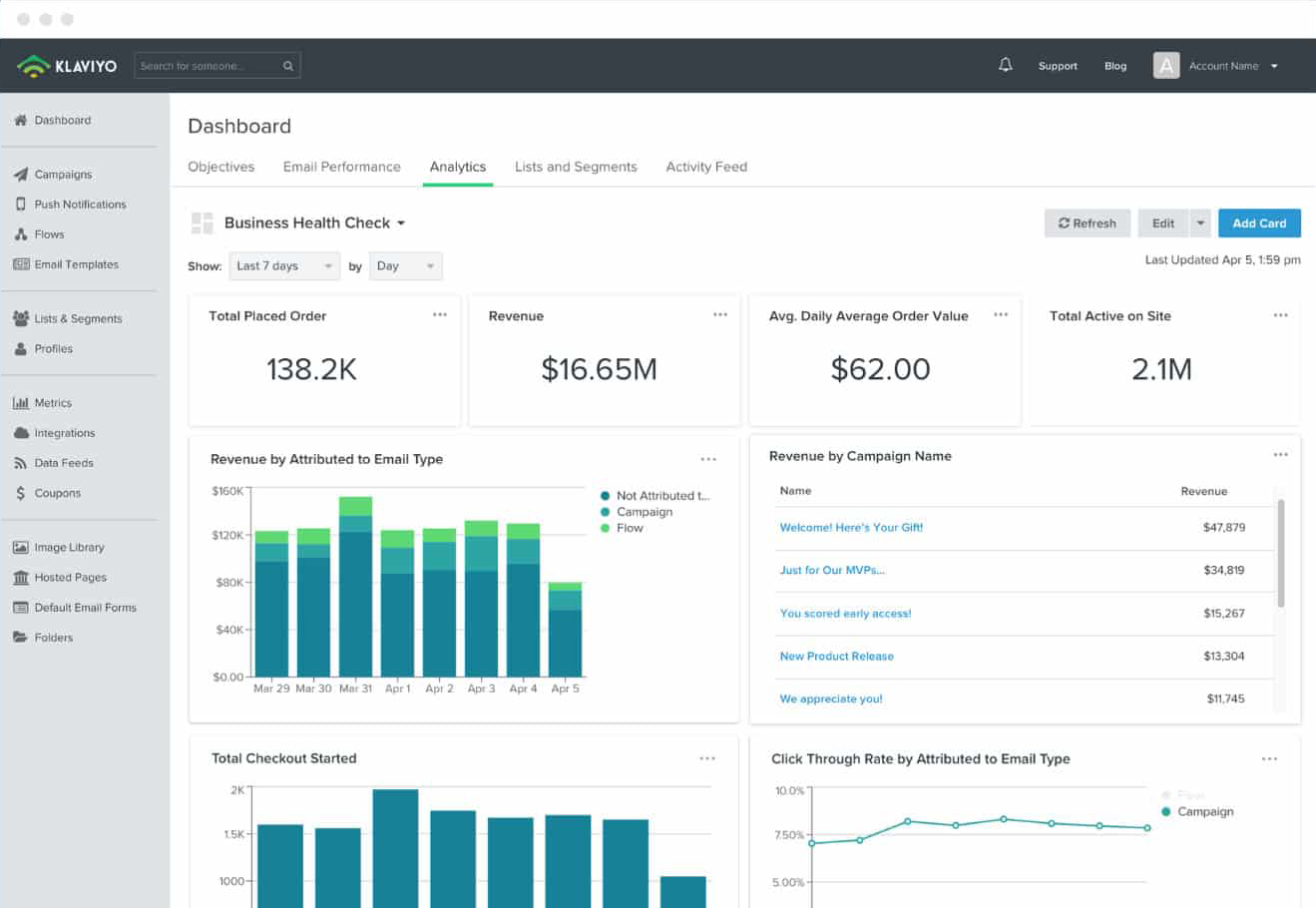
Klaviyo’s interface is intuitive. You can set up automations quickly and create campaigns with a few clicks. The visual flow builder makes it easy to see your customer journey at a glance.
Mailchimp has the simplest interface of all three. It’s beginner-friendly and clean, making it ideal for those just starting out.
ActiveCampaign’s dashboard is more complex. It’s powerful but takes time to learn. You’ll need patience and possibly some training to get the most from it.
Deliverability and List Management
Klaviyo offers strong deliverability backed by advanced list management. You can clean your list, manage suppression lists, and segment your audience based on detailed behavior, all of which protect your sender reputation.
Mailchimp has decent deliverability, but its list tools are less powerful. It’s suitable for general campaigns but struggles with the complexity of eCommerce.
ActiveCampaign excels at tagging and managing contacts, especially for lead nurturing. However, for eCommerce lists, it lacks deep integration with product and purchase data.
Best Platform for Different Types of eCommerce Brands

If you run a growing eCommerce store and want to automate smart campaigns using real-time data, Klaviyo is the clear winner. It’s purpose-built for online selling, comes packed with automation templates, and includes SMS under one roof. To see this in action, read our breakdown of Abandoned Cart Email Best Practices in Klaviyo.

For new store owners on a tight budget, Mailchimp is a decent starting point. However, you’ll likely outgrow it quickly once you plan to scale.

If your business requires CRM functionality alongside email marketing, ActiveCampaign is a solid choice, though it’s less tailored to eCommerce needs.
Conclusion
Choosing between Klaviyo, Mailchimp, and ActiveCampaign comes down to what your business actually needs from an eCommerce email marketing platform. All three can send emails, but they’re built for different jobs. Mailchimp is the easy on-ramp for new stores testing the waters on a tight budget. ActiveCampaign is the right call when a CRM and a human sales process sit alongside your email program. Klaviyo is the platform built specifically for online selling, with native Shopify sync, prebuilt flows, predictive analytics, and SMS all under one roof.
For most growing eCommerce brands, that purpose-built design is what separates a tool that works for you from one you constantly work around. When your platform talks to your store in real time, your automations fire at the right moment, your segments stay accurate, and your revenue follows. If you’re serious about turning email into a reliable sales channel rather than an occasional newsletter, Klaviyo is the clear winner.
The best platform, though, is the one you set up correctly and actually use. Start with your current store size, your growth goals, and the level of automation you’re ready to run, then choose accordingly. If you’d like help migrating or building flows that recover revenue, our Klaviyo consulting services team can get you set up the right way.