Every time a shopper adds products to their cart and leaves without completing checkout, your store loses more than a sale. It loses buying momentum. Cart abandonment remains one of the largest revenue gaps in eCommerce, with the documented average cart abandonment rate hovering around 70% across industries, according to Baymard Institute. For Shopify brands using Klaviyo, however, a well-built Klaviyo abandoned cart flow turns that gap into one of the most profitable automation opportunities available.
A properly structured abandoned cart flow automatically recovers lost revenue by reminding, persuading, and motivating shoppers to complete their purchase. When built strategically, this flow becomes one of the highest-performing assets inside your Klaviyo email marketing system, often generating more revenue per send than any promotional campaign you run.
Why Abandoned Cart Emails Still Work in 2026
Despite the expansion of SMS marketing, retargeting ads, and push notifications, abandoned cart emails continue to outperform most standard campaigns. The reason is simple: shoppers rarely abandon because they lost interest. They abandon them because they got distracted.
Modern buyers browse on mobile devices, switch between apps, compare pricing, or simply get interrupted. Many fully intend to purchase but never return on their own. A well-timed email reminder reactivates that intent while it is still warm, often within the first hour.

Data consistently shows that abandoned cart flows generate higher open rates, higher click-through rates, and stronger revenue per recipient compared to promotional campaigns. Even a modest cart recovery rate of two percent can produce significant additional revenue each month, especially for stores with steady traffic. For a store driving 10,000 monthly checkouts, recovering just 2% of abandoned carts at a $60 average order value adds roughly $12,000 in otherwise-lost revenue [ADD STAT: confirm with the brand’s actual AOV and traffic].
When executed properly, these emails feel helpful rather than intrusive. They act as reminders, not pressure tactics. That distinction is critical for long-term brand trust.
The Ideal Structure of a Klaviyo Abandoned Cart Flow
The most effective Klaviyo abandoned cart flow balances timing, buyer psychology, and strategic messaging. Sending just one reminder leaves revenue unclaimed, while sending too many erodes trust. A structured sequence of three emails, optionally supported by SMS, consistently produces strong recovery rates for Shopify stores. If you are still mapping out your wider automation strategy, our guide on how to set up your first Klaviyo flow walks through the foundations before you layer in cart recovery.
Below is the proven framework.
1. Email One: The Gentle Reminder (Send ~1 Hour After Abandonment)
The first email should go out while purchase intent is still high. At this stage, the shopper likely got distracted rather than changing their mind. The tone should be friendly, conversational, and low-pressure. Your goal is simply to bring them back.
This message works best when it focuses on convenience and clarity rather than urgency.
Key elements to include:
- Dynamic product image(s)
- Product name and price
- A clear “Return to Cart” button
- A direct checkout link
- A clean, mobile-friendly layout
Avoid discounts or aggressive urgency here. Many shoppers convert after this first reminder because they only needed a nudge, and discounting too early trains customers to abandon on purpose.
2. Email Two: Reinforce the Value (Send 12–24 Hours Later)
By the second email, hesitation becomes the primary barrier. The messaging should shift from reminding to persuading. This is where you strengthen confidence and reduce objections. Instead of asking “Did you forget?” you are now answering “Why is this worth it?”
Use this email to build trust and credibility. Focus on:
- Customer reviews and star ratings
- Testimonials or user-generated content
- Product benefits and features
- Shipping speed or delivery estimates
- Return policy or guarantees
Klaviyo’s dynamic product blocks display the exact items left in the cart, increasing personalization and relevance. This same contextual approach powers stronger results across your account. Our breakdown of personalizing Klaviyo emails with dynamic tags and custom properties shows how to extend that personalization beyond the cart.
3. Email Three: Create Urgency (Send ~48 Hours Later)
The third email introduces urgency. By this point, the shopper’s interest is cooling, and a time-sensitive incentive can reignite action. Urgency should feel genuine, not exaggerated. The objective is motivation, not pressure.
Common urgency triggers include:
- A limited-time discount
- A free shipping offer
- A low-stock notification
- A cart expiration reminder
If you offer a discount, use dynamic single-use coupon codes inside Klaviyo. This reinforces exclusivity and prevents code sharing. Keep the layout simple, the message focused, and the call-to-action clear.
4. Optional SMS: A Strategic Middle Nudge
For brands using Klaviyo SMS marketing, adding a text message between Email One and Email Two can meaningfully improve recovery rates. SMS performs particularly well for mobile-first shoppers who may ignore email notifications.
The message should be brief, personalized, and direct. Best practices for abandoned cart SMS:
- Keep it under 160 characters
- Personalize with first name or product name
- Include a direct checkout link
- Avoid heavy sales language
SMS works best as a supportive reminder, not a replacement for email. When structured this way, your flow moves shoppers through a logical psychological sequence: Reminder, Reassurance, Urgency, Reinforcement (via SMS). This progression mirrors the buyer’s mindset and maximizes your chance of turning abandoned checkouts into completed orders.
Design and Content Tips That Improve Conversions
Structure matters, but what’s inside the message is just as critical. Klaviyo gives you the tools to create emails that look clean, feel personal, and drive clicks. Apply these best practices inside your flow:
- Show the exact cart items. Include product thumbnails and links to the specific items left behind. People want to be reminded of what they loved, and visuals do that instantly.
- Use a single, clear call to action like “Complete My Order” or “Return to Cart.” Avoid multiple competing buttons.
- Highlight both urgency and value. If you’re not using a discount, emphasize fast shipping, limited inventory, or the item’s popularity.
- Write short, scannable copy in a friendly, conversational tone. Skip corporate language.
- Test subject lines and preview text. They influence open rates more than anything else. Klaviyo’s built-in testing tools make this easy. See our walkthrough on using Klaviyo’s A/B testing tools for subject lines and content.
- Optimize for mobile. Most abandoned carts happen on phones, so test load speed, button size, and readability.
- Use expiring dynamic coupon codes when discounting to create scarcity and discourage sharing.
How to Set It Up in Klaviyo
Building your abandoned cart flow in Klaviyo is straightforward, especially with its pre-built templates. Once your Shopify store is connected, Klaviyo automatically tracks checkout-started events, letting you trigger emails without custom development. If your store data isn’t syncing cleanly yet, fix that first using our Klaviyo and Shopify real-time sync setup guide.
Start by cloning Klaviyo’s default abandoned cart flow. Then:
- Adjust the timing of each message.
- Customize email copy, branding, and content blocks.
- Add a conditional split for SMS if applicable.
- Insert product blocks using dynamic cart content.
- Set a goal metric (like “Started Checkout to Placed Order”) to track flow success.
You can also segment based on cart value or item count. For example, send a different series to high-ticket cart abandoners or to shoppers who left items behind during a sale.
Measure What Matters: KPIs to Watch
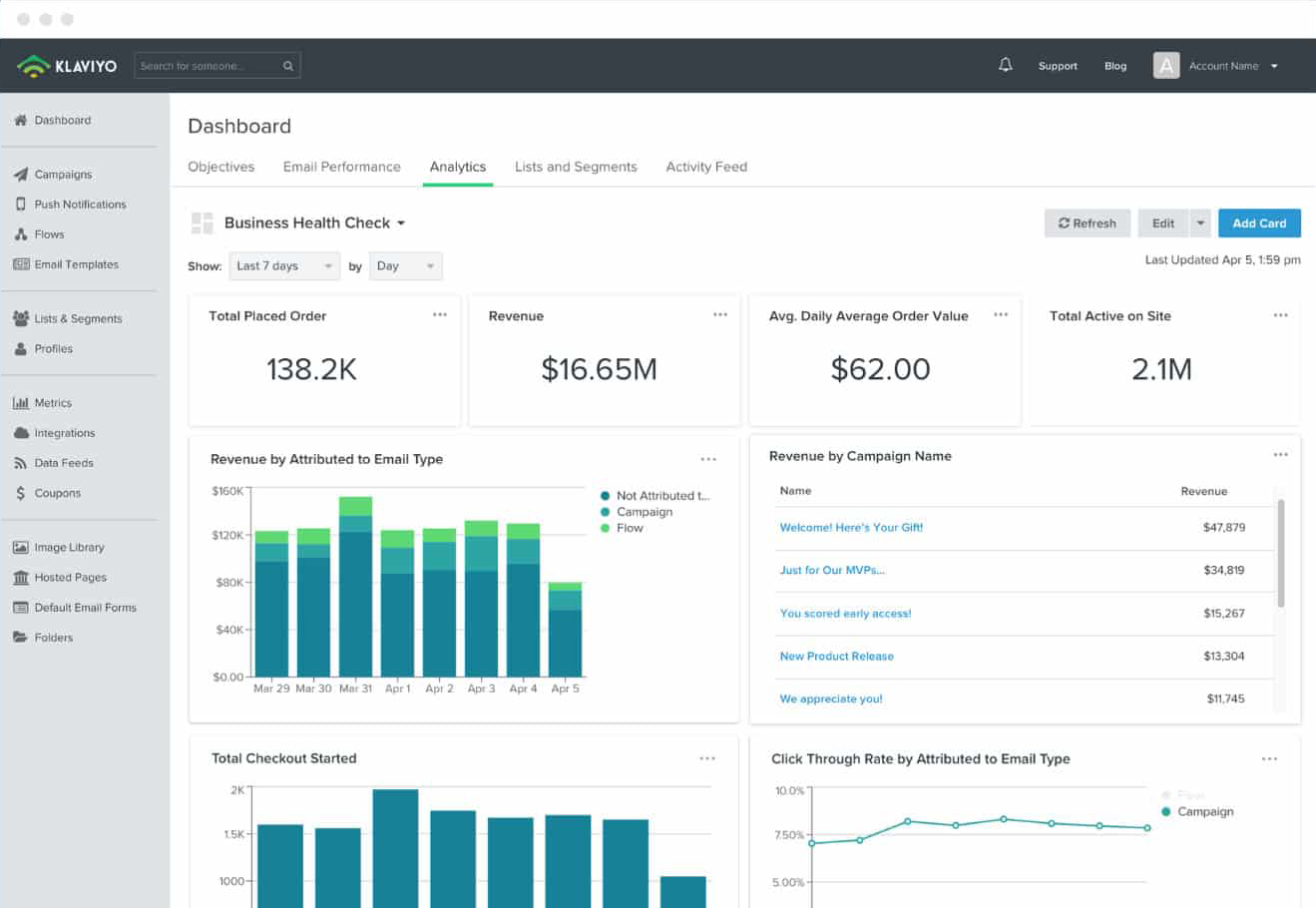
Recovery emails need to do more than look nice. Klaviyo’s real-time analytics let you measure exactly what’s working:
- Open Rates reflect your subject line and send timing. Aim for 40% or higher on the first email.
- Click Rates show how engaging your message is. Strong abandoned cart flows see 5–10% CTR.
- Placed Order Conversion is your bottom line. Recovering 2% or more is a healthy benchmark.
- Revenue per Recipient (RPR) is your north star. A high RPR means your flow is generating real money per message sent.
Cart recovery is only one piece of lifetime value. Once carts are converting, keep customers buying with a strong post-purchase flow that increases LTV in Klaviyo.
Your Revenue Recovery Machine Starts Here
If you’re not optimizing your abandoned cart flow, you’re leaving money on the table every day. A smart, well-timed series in Klaviyo doesn’t just remind customers. It persuades them to come back and complete their purchase.
With just three emails and a short SMS, you can turn cold carts into completed checkouts. The secret is in the structure, the incentive, and the tone: be helpful, not pushy; be timely, not rushed; be real, not robotic. In 2026, cart abandonment isn’t a problem. It’s an automatable, scalable opportunity.